Andromeda
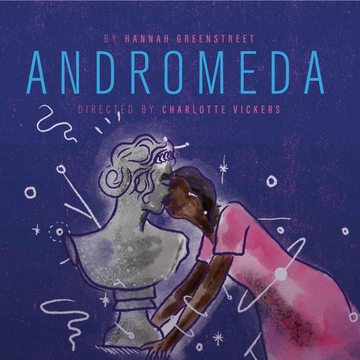
Image by Soofiya
Project Lead:
Hannah Greenstreet ( Faculty of English),
Partner Organisations:
Archive of Performances of Greek and Roman Drama
Andromeda, written by Hannah Greenstreet and directed by Charlotte Vickers, is a queer reimagining of Euripides’s play of the same name. It constellates fragments from the Ancient Greek (in a new translation by Martina Astrid Rodda) with scenes from a contemporary love story between two young women. In centring the experiences of its LGBTQ+ female characters, the play explores how the stories we tell each other impact our sense of identity. Having been workshopped with researchers in the Classics and English departments at Oxford, the play also offers new insights on engaging with fragments of classical tragedy in contemporary drama.
Since 2017, the play has been developed with support from Arts Council England, TORCH Theatres Seed Fund, Camden People’s Theatre, Nottingham Playhouse, the Archive of Performances of Greek and Roman Drama, Pegasus Theatre and the Oxford Playhouse. Work-in-progress performances have been shared at the APGRD, the Bunker Theatre and at Nottingham Playhouse as part of Amplify Festival. A full production is scheduled for summer 2021 at Camden People’s Theatre and one of the performances will be livestreamed.
DPhil Candidate Hannah Greenstreet successfully applied for the Theatres Seed Fund 2018/2019. Here, she reports back on her collaborative project with Pegasus Theatre.
Phase 1
How do you adapt an ancient play, of which only fragments survive, for a modern audience? This was the research question that I set out to explore in my reimagining of Euripides’ Andromeda, along with theatre director Charlotte Vickers, and colleagues Martina Astrid Rodda and Dr Marchella Ward from the Classics department. We collaborated with dramaturg Frey Kwa Hawking and actors Rosie Gray and Ashling O’Shea in a ten-day research and development period.
Alongside my DPhil research into contemporary feminist theatre and form in the English faculty, I am a playwright. The Theatre Seed Fund therefore provided a wonderful opportunity to bring my writing and research together to explore the politics of theatrical form in practice. There is growing scholarly interest in the fragment as a form in Classics. Our practice-as-research had a slightly different emphasis, focusing on what would be most engaging for an audience rather than seeking philological completeness. The R&D period gave us the space to explore the ambiguities in the source material and experiment with alternative ways of using fragments.
Before the workshop period, Astrid produced a new translation of the 44 surviving fragments of Euripides’ Andromeda, which vary in length from an exchange of dialogue to a line or a phrase. Euripides’ play starts with Andromeda, tied to a rock, about to be eaten by a sea monster when Perseus rescues her, which is also the part of the play with the most extant text. However, the real conflict in Euripides’ play was around whether Andromeda should be allowed to marry Perseus; her father Cepheus, the king of Ethiopia, objected because Perseus, a Greek, was a stranger from outside their culture. When we started the project, Charlotte and I decided that we wanted to create a queer adaptation of Andromeda – partly as part of a commitment to telling LGBTQ+ stories in our creative work, and partly because the fear that parents might disapprove of one’s relationship is a common experience for LGBTQ+ young people.
In my play (also called Andromeda), the Andromeda myth is paralleled with the story of a modern relationship between two young women at university: Andi, who is British-Pakistani, and Percy, who is Greek-British. Like Andromeda, Andi is stuck; over the course of the play, she realises that she is bisexual but does not think that she can come out to her parents. Percy, a classics student, is a Greek myth nerd; one of the things that brings Percy and Andi together is finding themselves in and exploring their identities through the Andromeda myth. Adding the contemporary story-line has allowed us to grapple with more problematic ideas of race and gender connected to heroism in the Greek myth; in our version, Andi challenges Percy on her saviour complex. The process of workshopping the script has also allowed us to explore how different ways of telling a story affect the story that gets told, and the relationship between storytelling and identity.
Given the subject matter of exploring identity, it is important to us to engage a young audience with the play – and, through it, Classics. Because of their expertise in creating theatre by, for and with young people in Oxford, Pegasus Theatre was the obvious partner in this. We worked with Nadia Rich to design and deliver a drama writing workshop for young people, which recreates some of our research and workshop process. Participants use fragments from ancient Greek plays to create their own short pieces, culminating in writing a monologue. The monologues will be collected in an anthology, creating a new collection of ancient and contemporary fragments.
Andromeda will be performed at Nottingham Playhouse as part of Amplify Festival on Saturday 19th October at 5pm. Tickets here: https://www.nottinghamplayhouse.co.uk/whats-on/drama/andromeda-and-me/.
Phase 2
Following on from the first phase of this project, Hannah applied to the Theatres Seed Fund to continue the collaboration between researchers in Classics and English, theatre director Charlotte Vickers, and Pegasus Theatre into a new phase. This phase of the project focuses on communicating practice research into classical fragmentary drama to the public. Activities were adapted during the pandemic, and you can read Hannah's reflections here.
This event is part of the Andromeda project, part of the Humanities Cultural Programme.
Watch again:
https://www.youtube.com/embed/rH1h1Or6QWg
Join playwright Hannah Greenstreet and director Charlotte Vickers in conversation with academics Professor Wes Williams and Marcus Bell for an insight into the creative process of adapting a Greek tragedy for the contemporary stage. Hannah and Charlotte’s new play, Andromeda, combines fragments from Euripides’ Andromeda with a contemporary love story between two young women. It will be performed at Camden People’s Theatre at the end of July, including a livestreamed performance. The panellists will discuss how the play came into being from initial idea to professional production. They will also explore how the creative team worked with academic researchers to tackle the fragmentary form of Euripides’s original play and what it means to ‘queer’ an ancient text. This event is part of the Humanities Cultural Programme and should appeal to anyone interested in Classics, theatre-making, knowledge exchange and practice as research.
Panel:
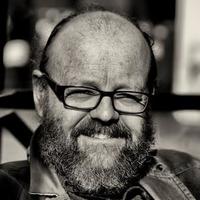
Professor Wes Williams, Director of TORCH and Professor of French at the University of Oxford
Wes Williams is the Director of TORCH, Professor of French Literature at the University of Oxford, and also a Fellow in Modern Languages at St Edmund Hall.
His main research interests are in the field of Renaissance studies; the critical study of genre and subjectivity; and the intersection of theory and practice in the literary, political, religious, and professional cultures of the early modern period. He also works on contemporary theory and film.
His first book – Pilgrimage and Narrative in the French Renaissance: ‘The Undiscovered Country’ (OUP, 1999) – was the first full-length study of the place of the Jerusalem pilgrimage in European Renaissance culture. He continues to work on narratives of travel and encounter, displacement and diaspora throughout the early modern period.
His second major study, Monsters and their Meanings in Early Modern Culture; Mighty Magic (OUP, 2012) explores the cultural, medical, and theological significance of monsters from Rabelais to Racine -- by way of Montaigne, Shakespeare, Titian, Pascal, Corneille, and a host of others. Political monsters (from Nero to the present) are a focus of his most recent work in this field.
He is currently writing a short Life of Rabelais, an account of the strange case of Magdeleine d’Auvermont, and a study of the long, enduring history of ‘voluntary servitude’.
Dr Hannah Greenstreet, Playwright and theatre researcher
Charlotte Vickers, Theatre director and arts fundraiser
Marcus Bell, DPhil candidate in Classics at the University of Oxford and co-founder of Queer and the Classical
Andromeda - a review
In times of trouble, of fear and of loss; in times of joy, and exasperated glee. When we as humans feel emotions to eager extents, we look to the stars for hope, solace, or perhaps to count our luck. Andromeda, written by Hannah Greenstreet and directed by Charlotte Vickers, captures this phenomenon that has always encapsulated us and places it into a heartwarming, yet equally heartbreaking modern context.
The story opens with a retelling of the classic mythology tale, introducing Andromeda (Andy) and Perseus (Percy), portrayed by Nina Singh and Rosie Gray respectively, immediately leave an impression that follows through the entire performance. Moving from the Greek story into the present world, we’re introduced to the characters as they’ll stay for the rest of the performance.
Andy can’t find her place within the world without being true to herself, but that may come with the risk of losing her family. Percy, who sees her outside a club by herself and starts up the conversation, serves as the metaphorical rock in the story. Whilst stable in her identity, rocks can be sharp and hurt and Percy’s want to progress their relationship out of Andy’s comfort is what proves to be one of the conflicts that permeate the story.
In a strange mix of traditional and contemporary, they do not remove the original mythological tale from Andy and Percy’s story, rather using it to enhance the themes and bring a different take to the vices and virtues of familial love, sexuality and female empowerment. There’s a fine line between having comedy in an otherwise meaningful performance and having a comedic play, and this show really stuck true to having elements of comedy that didn’t shadow the more pensive moments, which truly made those melancholy moments more poignant.
A story describing an archaic tale manages to not make its characters anachronistic. They fit perfectly in the world we know; we’ve all met an Andy and a Percy. It makes the performance all that more heart-wrenching, that we can imagine ourselves up there, or a family member, a beloved friend.
The conflict of an out-of-the-closet lesbian and a woman coming to terms with being bisexual transpires onto the stage in an eerie way. That does not mean we have a victim and someone in the wrong. We can all identify with both aspects of Andy and Percy’s story. Whilst Andy can’t live her life in full for fear of exile, Percy can’t live hers being hidden in love. Balance, we find, is a haunting thing when it’s shown to both of its extremes.
It’s rare that I see myself in content on the screen or in the spotlight, but As someone who has struggled with the fears of coming out not only to myself, but to friends and family, I could absolutely see myself represented on that stage. All the fears of being seen as an ‘other’, as someone different. But the need to be seen as who you are, to be respected as an individual and not as a facade. For too long, queer characters, whether in gender or sexuality, have been made out to be villains or creatures in the closet, yet here was a story of two women that are neither.
Nina Singh and Rosie Gray characterise the characters of Andy and Percy with such eloquence and anguish. For a performance consisting of two people, not once does it feel empty or slacking. Their energy fills the stage with much vigour, we are emoted as an audience to feel their happiness, their love and their pain even more.
Some moments felt they appealed to an audience that wasn’t the target, and were such an odd moment of awkwardness in otherwise serene viewing. At times there was a struggle trying to figure what period of time in their relationship we were witnessing. Other times dragged on to an uncomfortable extent, only noticeable with hindsight when trying to recount the performance.
Minor problems in an otherwise eloquent script and piece of entertainment that did more than that. I know myself and many others learnt something about greek mythology and the stars within this play, not even counting the many who will have identified with the characters and seen themselves on a medium they haven’t before.
Kind, but honest. Beautiful with its flaws. Andromeda tells a beautiful story of two young women in vastly different worlds, navigating through their personal lives and position within society. However close or far apart they find themselves to be from each other, they were always under the same shining stars.
Shae Moors is studying Performing Arts with Activate College and is a Creative Intern at TORCH
Andromeda Collaborators
Hannah Greenstreet
Project Lead, Writer
Faculty of English | Playwright
Hannah has recently submitted her DPhil on ‘Experiments with Realism in Contemporary Feminist Theatre in Britain’, which was funded by the Arts and Humanities Research Council. She is Co-Editor of Exeunt Magazine and also reviews for The Stage.
Andromeda is Hannah’s fifth play. She has developed her playwriting with Soho Writers’ Lab, the North Wall, and Spread the Word. In 2019-20, she was a SPARK Supported Artist at Pegasus Theatre and was commissioned to write their 2021 young company summer show, Goldfish.

@hgreenstreet1
Charlotte Vickers
Director
Charlotte is a director and fundraiser who has worked with Nottingham Playhouse, the North Wall Arts Centre, the Oxford Playhouse and Theatre 503. She trained at the Young Vic, on the North Wall Catalyst programme and with Lisa Cagnacci.
@charlvickers
Frey Kwa Hawking
Dramaturg
Frey Kwa Hawking is a dramaturg and critic. He is part of Paines Plough's first Re:Assemble dramaturgy cohort, has taken part in the Royal Court's Script Panel programme, and was the Dramaturg Assistant for the Young Vic's 2020 Neighbourhood Voices programme. He is part of the creative team for Asian Pirate Musical among other productions, and has written for A Younger Theatre, Exeunt Magazine and The Stage.
Verity Johnson
Nicola Chang
Rosie Gray
Actor
Ashling O’Shea
Martina Astrid Rodda
Translator and Classical Advisor
Astrid has just finished an Oxford PhD on formulaic variation and linguistic productivity in early Greek epic. Before this, they have studied at the Scuola Normale Superiore in Pisa and at Durham University. They are interested in the application of linguistic approaches to ancient languages, but also in the reception of Greek myth. Their next research project is on disability and gender in Imperial Greek literature.
Contact:
Hannah Greenstreet: hannah.greenstreet@jesus.ox.ac.uk (Writer)
Charlotte Vickers: charlotte.vickers@hotmail.com (Director)
#AndromedaPlay

