
A Discussion on the Desirability of Life Extension with Professor John K. Davis
Part of the Boundaries of Humanity Discussion Series

Tuesday 10 February 2026, 5.30pm - 7pm
Online - Please contact Andrew Moeller to express interest regarding the readings and video call link: andrew.moeller@history.ox.ac.uk.
The particular topic under focus this week will be life extension technologies.
Boundaries of Humanity Discussion Group Series
With the rapid development of AI and biotechnologies (including those relating to germline gene editing, brain-computer Interfaces, life extension, etc.) come vast powers to reshape ourselves and the natural world. As technological advances grant us new powers, so do they blur some boundaries between humans, animals, and machines, prodding us to ask the question: what does it mean to be human?
Drawing upon readings in the humanities (including philosophy, theology, literature, etc.) and the sciences, this group will attempt to bridge the existential and empirical study of human identity - and within that context, ask if and how such reflections might help chart a path forward in relation to the right uses of new and potent technologies. We will focus in particular on questions of human purpose, place, and flourishing within the natural order.
The reading group is open to students at all levels of study (including medical students), as well as faculty. We will meet for about 1 hour, twice per term.
Under the umbrella of the medical humanities, this will be a casual reading and discussion group. The readings for each session will be introduced by a different participant - and the readings for each session will take a total of roughly 1 hour to complete.
Special Guest
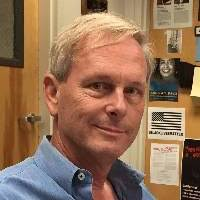
John K. Davis will be joining us to talk about the ethics of life extension. John is a philosopher and legal scholar serving as a Professor of Philosophy at California State University, Fullerton. He earned his J.D. from New York University School of Law in 1984 and later completed a Ph.D. in Philosophy at the University of Washington in 2001. His research spans bioethics, ethical theory, philosophy of law, and life‑extension ethics. Davis has published extensively on subjects including advanced directives, medical ethics, moral judgment, and the ethics of life extension. He is recognized for bridging philosophical analysis with practical ethical issues, contributing to both academic scholarship and public understanding of complex moral dilemmas.