The Smart Machine and the ‘Almost Said’
Tuesday 27 October 2026, 3pm - 5pm
Seminar Room 00.063, Schwarzman Centre for the Humanities and online
Speaker: Willard McCarty, Professor Emeritus, King's College London
All Welcome - to receive the online joining link, please email david.zeitlyn@anthro.ox.ac.uk
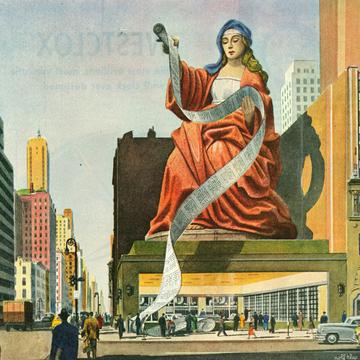
I begin with a distinction, between ‘artificial intelligence’ (a field of research) and ‘AI’ (a polysemous imaginary). I use the collective term ‘smart machine’ for the mechanical instantiation of this imaginary, specifically to denote the tangible ‘smart’ things we actually meet, on our desks and in daily life. My subject is how studies in divination might instruct the machine to move beyond a dangerous adolescence to a divinatory adulthood. Studies in divination at sites around the world sum to an everywhere in human time and space, and to a nowhere if we seek a singular form. The machine as we know it is far more recent, but by design it matches divination’s boundless plurality. Association of the two goes back at least to Turing’s doctoral dissertation (1938, 172f), where we find the term ‘oracle’ expressing his interest in ‘the mental ‘intuition’ of truths which are not established by following mechanical processes’ (Hodges 2013, 15–17). We have imagined such a machine repeatedly, in words and images, from Turing onward (McCarty 2024, 116ff). The problem I mean to address is how, with the help of this imaginary and anthropological scholarship, we might bring out and school a digital Pythia, whose lineaments have been intrinsic to the smart machine all along.
Divination, Oracles, and Omens Network