
Looking Beyond
Primary Investigator
Andrew McLellan (Pitt Rivers Museum)
Partner Organisations:
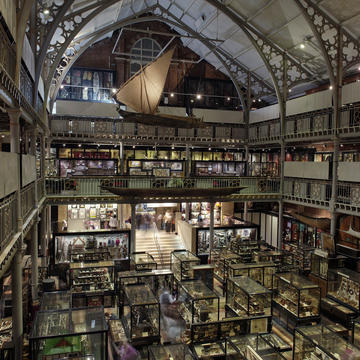
As the world adjusted to Covid-19, the Pitt Rivers Museum made content available online. The Museum intended to reinterpret and build on its Community Engaged Research model through a series of co-produced, live-streamed, bi-weekly webinars. The Radical Hope: Beyond the Museum series built on existing projects and partnerships (Haida Gwaii, Nyema Droma, Oxford Windrush, Losing Venus, Beyond the Binary, Messy Realities, In Control by Design, and the Queer Studies Network, to name a few) and was shaped in collaboration with local and global communities and research visitors.
The webinars interwove pre-recorded film, tours, and performance with live panel discussions. They took place in the Museum, in people's kitchens, and in community partner venues. As the programme developed, it began to include conversations on colonial complicity, anti-racism, and sovereignty.
Looking Beyond: What's in the Drawers? Rewatch the Event
Freelance curator Jon Sleigh and a panel of engagement specialists considered what happened to the space left behind at the Pitt Rivers Museum after the Tsantsas (shrunken heads) had been removed from public view. The event took the form of an open conversation about space, access, and opportunities that emerged when racist narratives were removed, and what could take their place.
Where is the Love? Rewatch the Event
https://www.youtube.com/embed/dnLwZsIJfQE
Looking Beyond: What's in the Drawers? Rewatch the Event
Freelance curator Jon Sleigh and a panel of engagement specialists considered what happened to the space left behind at the Pitt Rivers Museum after the Tsantsas (shrunken heads) had been removed from public view. The event took the form of an open conversation about space, access, and opportunities that emerged when racist narratives were removed, and what could take their place
The emotion of removal
Let's Talk Labels: A Conversation around the Pitt Rivers Museum's Labelling Matters Project – Part 1
Over the previous two years, the Labelling Matters project at the Pitt Rivers Museum had begun to tackle the problematic language used in the Museum's labels. However, it also asked whether one of the primary issues stemmed from the very process of how labels were perceived, created, and displayed in the Museum.
Reclaiming the Uncanny
Labelling Matters researcher Marenka Thompson-Odlum, artists Eiko Soga and Royce Ng, and anthropologists Daisy Bisenieks discussed a multimedia and multisensory approach to museum interpretation, as well as the unexpected and uncanny results of their own practices. Together, they explored how these approaches could work within a space such as the Pitt Rivers Museum
Let's Talk Labels: A Conversation around the Pitt Rivers Museum's Labelling Matters Project – Part 2
Over the previous two years, the Labelling Matters project at the Pitt Rivers Museum had begun to tackle the problematic language used in the Museum's labels. However, it also asked whether one of the primary issues stemmed from the very process of how labels were perceived, created, and displayed in the Museum.
Decolonial Thinking
Pitt Rivers staff members from different departments used labels to have a frank conversation about the practicalities, challenges, and successes of implementing the decolonial methodology developed through the Labelling Matters project in their various museum roles.
"There Were No Women": The Pitt Rivers Museum and Britain's First Female Anthropologists
In the opening two decades of the twentieth century, at a time when women were barely recognised at the University of Oxford, five women trained at the Pitt Rivers Museum and became Britain's first professional female anthropologists. Between them, they carried out pioneering research on Easter Island, in Siberia, Egypt, the Solomon Islands, Papua New Guinea, and the pueblos of the American Southwest. No other British university had trained active, professional female anthropologists before 1920. Oxford had been ahead of its time, yet it remained an extremely conservative institution that was largely hostile to women.
Based on her book Undreamed Shores: The Hidden Heroines of British Anthropology, Frances Larsen's talk explored how these five women successfully infiltrated such a closed, masculine community.
Pitt Rivers Museum Repatriation as a Pathway to Redress and Reconciliation
More often than not, the museum field reimagined repatriation from a theoretical viewpoint based on the development of policies or procedures that enabled or obstructed repatriation, often focusing on the impossibility of repatriation because of the obstacles and complexities the process presented. Together with tribal representatives, experts who proactively supported tribal elders through the repatriation process, and museum practitioners who had successfully engaged in international repatriations, this conversation shared how participants had navigated the many hurdles of the repatriation process and the new practices they had developed. The discussion aimed to ensure that the shared learning from undertaking repatriation would help build better return processes and pathways to support reconciliation, redress, and healing.
Contact:
Jessica Croll-Knight

