Medea
Part of the Humanities Cultural Programme, one of the founding stones for the
future Stephen A. Schwarzman Centre for the Humanities.
Primary Investigator
Fiona Macintosh | Faculty of Classics
Partner Organisations:
Shivaike Shah, Francesca Amewudah-Rivers, Dr Rosa Andujar (KCL), Dr Avery Willis-Hoffman
A new adaption of Euripides' Medea
At Khameleon, we understood that creativity was at its best when it was diverse. The arts were about living, about people, and about sharing through creativity. This was our founding principle at Khameleon. Celebrating diverse cultures lay at the heart of everything we did. We wanted to explore new narratives, platform untold stories, and discover fresh perspectives through interdisciplinary forms.
Background
Khameleon was founded in 2020, building on a production company established at the University of Oxford. Drawing on theatre, music, and film, the company developed innovative productions that celebrated the creative power of diverse voices.
Our Work
Khameleon developed its first production, a retelling of Euripides' Medea, which built on its 2018 production at the University of Oxford. The company assembled a team of creatives, academics, and pioneers from across the globe to develop a show that embodied everything it sought to achieve at Khameleon.
Khameleon also embarked on the Uprooting Medea tour, co-sponsored by the Brown Arts Institute (BAI). The four-month tour, curated and produced by BAI Visiting Artist Shivaike Shah, commenced at Brown University and continued across 12 states, visiting 30 of the USA's leading colleges and universities. During the tour, the company visited classes, worked with students in script workshops, and participated in roundtable conversations with students and staff on a range of topics related to the Medea project. At the conclusion of the tour, Khameleon returned to Brown to host a virtual gathering for participating institutions, creating space for an intercollegiate exchange of experiences around the project. The event included appearances by special guests, who led discussions examining the performance history and legacy of Medea and the Classics more broadly.
Platforming Artists Project
Khameleon had the privilege of working with an extraordinary group of artists. Through the Platforming Artists podcast series, the company explored the work of its pioneering creatives beyond Medea.
Khameleon Classics Podcast
For two thousand years, the study of the Greek and Roman worlds had been at the centre of Western education. Khameleon Classics was the podcast that asked why. It explored questions such as: Why were we so fascinated by the Classics, and why had the classical world come to encompass only Greece and Rome? How could ancient history shed light on the fight for a fairer society? And what responsibility did it bear for the complex legacy of colonialism that societies continued to confront?
https://www.youtube.com/embed/8SsIHyRwGt8
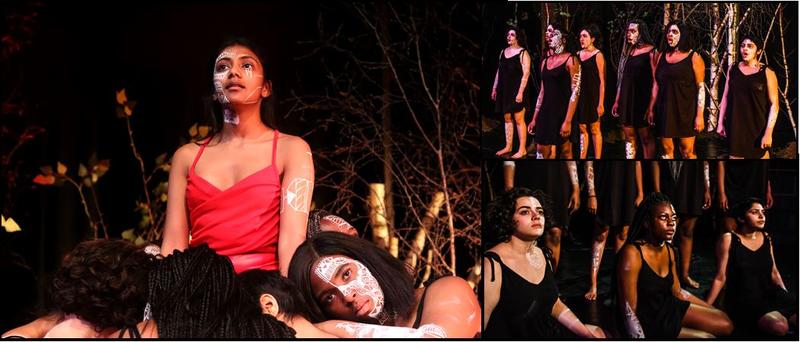
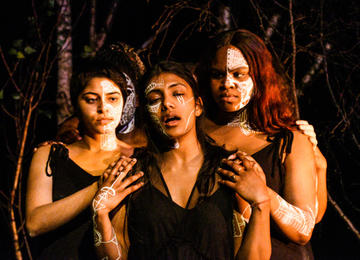
In May 2018, the Oxford University Drama Society performed a modern adaptation of Euripides' tragedy Medea with an all-Black, Asian and Minority Ethnic (BAME) cast and crew.
"You think that I might be a witch? That I might be a strange, dangerous monster? Because I wasn't born here and because I am a woman."
Set in a dystopian world, Jason abandoned his wife, Medea, and their two children. He remarried the princess of the land in the hope that this alliance would bring him security and prosperity. Medea, a "barbarian" who had been left alone, was viewed as a menace to the established order and was threatened with banishment. After pleading for mercy, she was granted one day before she had to leave, during which she planned to carry out her dark and disturbing quest for "justice".
Medea was not simply a play about fidelity, family, and revenge, but an exploration of the psychology of those most marginalised by society. It examined themes of identity and belonging, the politics of power and femininity, and the ways in which insult, loss, and the threat of isolation could drive people to harm those they loved most.
Featuring an all-BAME cast and crew, the Oxford BAME Drama Society's production combined music, movement, and spoken word to transform Robin Robertson's translation into a celebration of culture and an exploration of identity.
Based on Robin Robertson's translation.
Adapted by Francesca Amewudah-Rivers.
Music featured
Ibeyi - No Man Is Big Enough For My Arms
Nina Simone - I Wish I Knew How It Would Feel to Be Free
Kendrick Lamar - How Much A Dollar Cost
Kanye West - Monster Fugees - Ready or Not
Enya - Boadicea
Stormzy - Blinded By Your Grace, Pt. 2
Dos Santos, V., 'Oxford’s students are diversifying their theatre scene', gal-dem (2018) http://gal-dem.com/oxfords-students-a...
Andújar, R., 'Play Review - Khameleon Productions’ Medea: Oxford’s first BAME play', Didaskalia: The Journal for Ancient Performance, 14(1). (2018)
In each episode of the Khameleon Classics podcast, producer Shivaike Shah speaks with an expert in the field about some of the most urgent questions facing the study of Classics today.
Macintosh
Supported by the Humanities Cultural Programme and the Arts Council England