Elliptical Reading
Primary Investigator
Abigail Williams (St Peter's College, Faculty of English)
Partner Organisations:
Elliptical Reading was a collaboration between Abby Williams, a researcher in the history of communal reading, and Abigail Reynolds, a contemporary artist with a focus on libraries and book use. It was supported by Wolverhampton Libraries and the British Art Show, which was coordinated by Hayward Gallery Touring. The project focused on acts of reading together, exploring what it meant for an individual to share their chosen book with others in the library—a communal space dedicated to reading.
Abby Williams's The Social Life of Books (Yale, 2017) examined the ways in which historical readers connected through the books they read, made, and shared. Elliptical Reading created an artwork that drew on bibliotherapy and the reading group to produce a visual and aural polyphony, with each reader bringing a radically different text, like different instruments in a sextet. The readers and their texts were selected to represent the full diversity of the local community, bringing issues of identity and place to the fore.
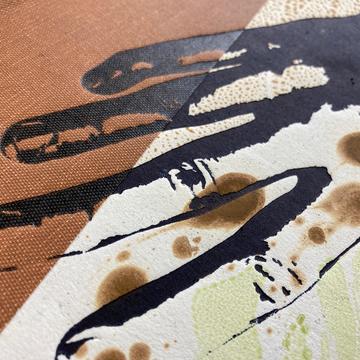
The project formed part of the Wolverhampton Literary Festival and the British Art Show 9. Elliptical Reading also had a visual presence as an artwork installed in the library for the duration of the project.
Event:
Watch Abigail Reynolds' 'Elliptical Reading'
https://player.vimeo.com/video/713199818?h=43123d97ab&title=0&byline=0&portrait=0
Elliptical Reading Wolverhampton_4mins from abigail reynolds on Vimeo.
A four minute edit of the reading group in Whitmore Reans library in Wolverhampton. Elliptical Reading is part of British Art Show 9 2021-22.
Contact:
Abigail Williams
Abigail Williams
Project lead
St Peter's College, Faculty of English
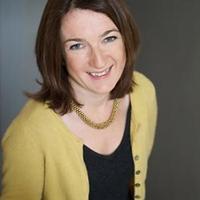
Abigail Williams is Professor of Eighteenth Century Culture at St Peter’s College, University of Oxford. Her recent work has focussed on the history of reading, and especially the practice of sociable reading in eighteenth-century homes. She is currently focussing on misreading, and the ways in which ideas of the ‘good’ reader have affected our approaches to literature. This will be published as Reading it Wrong with Princeton University Press in 2022. Abby was born in London in 1972 and lives and works in Oxford.
Her most recent book is The Social Life of Books: Reading together in the Eighteenth-Century Home (Yale, 2017) and before that she edited Jonathan Swift’s Journal to Stella (CUP, 2013) and wrote Poetry and the Creation of a Whig Literary Culture (OUP, 2005). She led the Leverhulme-funded Digital Miscellanies Index, and is currently developing an AI-based messaging game to teach Shakespeare in schools. She is Director of Innovation for the Faculty of English at Oxford and academic lead for the Humanities Division Schwarzman festival.
Statement
My work is also rooted in books, libraries and readers. In all the work I have done I have begun by being curious about the ways we have read differently in the past, and I have been intrigued by forms of evidence that challenge common assumptions about literary history. So my DPhil was about a form of poetry that was once hugely popular, and now seems overblown and bellicose. What was it that enabled it to speak to its first readers so powerfully? What did they see in it that we do not? The Social Life of Books was about habits of reading together that were rooted in particular cultural and material contexts of their time. As I researched and wrote it, I became more and more engrossed in the case studies I uncovered of ordinary readers and their sense of their reading lives as a form of social connection. This seems to me to be a welcome reminder of the ways in which books continue to bind us together.
Abigail Reynolds
Artist
Click here to visit the website of Abigail Reynolds
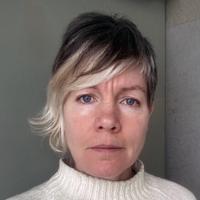
Abigail Reynolds is an English artist whose multifaceted practice encompasses collage, photography, sculpture, printing, film, video, performance, and installation. She lives and works in far west Cornwall.
Recent solo exhibitions include Taken in a few seconds /// By the reflection of light Harris Museum Preston, 2020 The Universal Now and further episodes PEER gallery London 2018 and We Beat the Bounds commissioned by Tate St Ives to celebrate the opening of their new building in 2017. She was the third recipient of the BMW art journey awarded at Art Basel in 2016, and consequently made a journey to fifteen former great libraries along the ancient Silk Road. Her book ‘Lost Libraries’ was published by Hatje Cantz in December 2017 and is widely available.
She will be working across all the cities of the British Art Show 9 tour (Wolverhampton: opening March 2021, Aberdeen: opening July 2021, Plymouth: opening November 2021, Manchester: opening May 2022)
Statement
Much of my work starts with images printed in books. Widely circulated images (for example of London monuments) shape our shared perception of places and identities, by which individuals navigate. I often use my work to think about how subjectivity is mapped onto both place and time, photography being a direct way to think about time: you can’t avoid time with a photograph. I often work sculpturally with glass, using it like a lens to focus the act of looking. This is also an extension of photographic looking which is necessarily through a glass lens.
Whether I am working on a sculpture, a film or an event it aligns with a collage sensibility. All my work is in essence collage; the practice of bringing found materials into a fresh context. As I work, I try to expose and spatialise the ideological and the formal structure of an image or a place.
“The pages and images she excavates, now dislocated from their original context, become more like artifacts or archaeological remnants – more enigmatic, more mutable, and open to more complex meaning and association.” (Martin Clark 2013)

