
Critical Animal Studies Reading Group
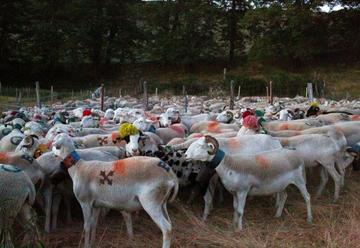
Image credit: Carnival © Elisabeth Darrobers
Wednesdays 28 October 2026 - 30 June 2027 monthly, 5pm - 6.30pm UK / 6 - 7.30pm Germany
Email envhums@torch.ox.ac.uk to register.
Located at the intersection of the humanities, the social sciences and the natural sciences, critical animal studies have undergone a major expansion in the last 10 to 15 years. Through their critical examination of the processes, histories and ideologies which naturalise the domination of animals by humans, and their exploration of the connections between speciesism and other forms of structural violence and oppression (including racialisation, ableism and sexism), critical animal studies have opened up new avenues of research, asked difficult questions, and profoundly destabilised a number of bodily, conceptual and disciplinary boundaries. In this academic year, 2026-2027 – as we witness the emergence of new ambiguities in human-animal relations (e.g., the development of AI surveillance technology for tracking animal panic from space), as well as moral abysses (e.g., the video-game-inspired explosion in the axolotl pet trade), yet also reasons for hope (e.g., the renewed interest in animal life attendant upon the 100th birthday of Sir David Attenborough) – it feels timely to revisit critical animal studies’ core tenets and map out new terrain for thought, collective action, and pedagogy within the field.
Privileging multidisciplinary and intersectional texts and discussions, this reading group proposes that we collectively embrace disanthropocentric perspectives in order to examine how a renewed consideration of animals can enrich our various disciplines and research agendas. Embracing ecofeminist, decolonial and indigenous scholarship, we will examine multiple forms of connections between humans and more-than-humans beyond the Western Cartesian model of the animal-machine. Bringing together academics working on, or who are curious about, critical animal studies, we hope to explore the theoretical, philosophical and political implications of disanthropocentric research and to foster a greater sense of solidarity with more-than-human animals.
This collaborative initiative by scholars at the University of Oxford and the Eberhard Karls University of Tübingen represents an opportunity to pursue an ethical endeavour in tandem, as we conceptualise and promote more-than-human flourishing internationally from an intercultural standpoint. Both Oxford and Tübingen are cities which feature porous boundaries between the human and nonhuman worlds, hosting multiple species in their rural-urban borderlands. These species are companions for helping us to think about how to inhabit multi-species communities ethically. How can our universities recreate academic, institutional, and pedagogical practice to incorporate more-than-human concerns, perspectives, and knowledges?
KEY INFORMATION
- Our reading group will meet once monthly, beginning in October 2026.
- We will host convivial discussions primarily in English, though with a keen openness to linguistic and intercultural exchange. We encourage any participants with knowledge of languages beyond English to bring theoretical texts in other languages for presenting to the group, if they would like to do so.
- Our proposed sessions will cover kinship-making and multi-species entanglements, queer animal studies, zoopoetics, eco-feminism, decolonial approaches, veganism and animal-friendly pedagogical practice.
- Open to anybody working with or curious about critical animal studies.
If you are interested in joining, send us an e-mail and we will be pleased to send you the joining instructions:
- dorothee.boulanger@humanities.ox.ac.uk;
- andrzej-pierce-snowden.stuart-thompson@philosophie.uni-tuebingen.de
- envhums@torch.ox.ac.uk
We look forward to welcoming you.
Dr Dorothée Boulanger, Career Development Fellow in Women's, Gender and Sexuality Studies, University of Oxford
Dr Andrzej Stuart-Thompson, Global Encounters Fellow, Eberhard Karls University of Tübingen
Wallerand Bazin, DPhil in Geography and the Environment, University of Oxford
Dr Jacob Brandler, Postdoctoral Fellow, Rothermere American Institute, University of Oxford
Dr Frances Clemente, Turpin Junior Research Fellow, Oriel College, and Lecturer in Italian, University of Oxford
Kristell Pech Oxte, PhD in Collocations, Interdisciplinary Centre for Global South Studies, Eberhard Karls University of Tübingen
READING SCHEDULE
Each session of our reading group, at 5pm - 6.30pm UK / 6pm - 7.30pm Germany, will be tied to a theme with suggested readings, as follows:
kinship making
Wednesday 28th October 2026
- Gumbs, Alexis Pauline. Undrowned: Black Feminist Lessons from Marine Mammals. Chapters 14 to 16, ‘Surrender’/ ‘Go Deep’ / ‘Stay Black’. Chico: AK Press, 2017.
- Erev, Stephanie. 2018. ‘What Is It Like to Become a Bat? Heterogeneities in an Age of Extinction.’ Environmental Humanities 10 (1): 129–49.
- Kerwillain, Shadrach and Gregg Mitman, ‘On Extraction, Care, and Interspecies Alliances.’ Isis, vol. 117, no. 1, March 2026, pp. 154-161.
queer animal studies / ecologies
Wednesday 25th November 2026
- Morton, Timothy. ‘Guest Column: Queer Ecology.’ PMLA : Publications of the Modern Language Association of America, vol. 125, no. 2, March 2010, pp. 273–82,
- Sandilands, Catriona, and Bruce Erickson. ‘Introduction: A Genealogy of Queer Ecologies’, in Queer Ecologies : Sex, Nature, Politics, Desire. Indiana University Press, 2010.
- Jones, Pattrice. ‘Queering Animal Liberation: Thoughts Toward Interspecies Solidarity’, in The Routledge Companion to Gender and Animals, ed. by Chloë Taylor (Routledge, 2024).
zoopoetics and animal aesthetics
Wednesday 27th January 2027
- Abram, David. ‘Animism and the Alphabet’, Chapter 4 in The Spell of the Sensuous: Perception and Language in a More-Than-Human World. New York: Vintage Books, 2017.
- Pick, Anat. ‘Vegan Cinema’, in Thinking Veganism in Literature and Culture, edited by Benjamin Westwood and Emelia Quinn, Springer International Publishing, 2018, pp. 125–46.
- Simon, Anne. ‘Literature and Animal Expressiveness: On the Cognitive and Ethical
- Aspects of Zoopoetics’, in Outside the Anthropological Machine : Crossing the Human-Animal Divide and Other Exit Strategies edited by Mengozzi, Chiara. Routledge, 2020.
species barriers
Wednesday 24th February 2027
- Amir, Fahim. ‘Swinish Multitudes’, in Being and Swine. Canada: Between the Lines, 2020.
- Calarco, Matthew. ‘Mental Ethology’, Chapter 1 in The Three Ethologies: A Positive Vision for Rebuilding Human-Animal Relationships. University of Chicago Press, 2024.
- Stépanoff, Charles, Charlotte Marchina, Camille Fossier, Nicolas Bureau, David G. Anderson, D. Bumochir, Vladimir Davydov, Natasha Fijn, Kirill V. Istomin, Hiroki Takakura, Rane Willerslev, ‘Animal Autonomy and Intermittent Coexistences: North Asian Modes of Herding’, Current Anthropology, Vol. 58, No. 1 (February 2017), pp. 57-81.
animaladies
Wednesday 31st March 2027
- Donald, Diana. ‘Introduction’, Women Against Cruelty: Protection of Animals in Nineteenth-Century Britain. Manchester: Manchester University Press, 2021.
- Donovan, Josephine, and Carol J. Adams. ‘Introduction’, in The Feminist Care Tradition in Animal Ethics, edited by Josephine Donovan and Carol J. Adams, 1-20. New York: Columbia University Press, 2007.
- Probyn-Rapsey, Fiona. ‘The “Crazy Cat Lady”’, in Lori Gruen and Fiona Probyn-Rapsey (eds). Animaladies: Gender, Animals, and Madness. London: Bloomsbury Academic, 2020.
decolonising animals
Wednesday 28th April 2027
- Belcourt, Billy-Ray. ‘An Indigenous Critique of Critical Animal Studies’, in Colonialism and Animality: Anti-Colonial Perspectives in Critical Animal Studies, edited by KS Montford and C Taylor. Abingdon: Routledge, 2020, pp. 19–28.
- Boisseron, Bénédicte. ‘Introduction’, in Afro-Dog: Blackness and the Animal Question. New York: Columbia University Press, 2018, pp. ix-xxvii.
- Mwangi, Evan. ‘Being Animals, Becoming Africa’, Chapter 1 in The Postcolonial Animal: African Literature and Posthuman Ethics. Ann Arbor: University of Michigan Press, 2019.
veganism
Wednesday 26th May 2027
- Adams, Carol J., ‘The Sexual Politics of Meat in Authoritarian Times’, Bloomsbury Lecture Series, 31st March 2026, YouTube video.
- Dunn, Kirsty. ‘Kaimangatanga: Maori Perspectives on Veganism and Plant-based Kai’, Animal Studies Journal 8(1), pp. 42-65, 2019.
- Francione, Gary L. ‘Animal Welfare and the Moral Value of Nonhuman Animals.’ Law, Culture and the Humanities [London, England], vol. 6, no. 1, February 2010, pp. 24–36.
teaching (with) animals
Wednesday 30th June 2027
- Corman, Lauren, and Tereza Vandrovcová. ‘Radical Humility: Toward a More Holistic Critical Animal Studies Pedagogy.’ Counterpoints, vol. 448, 2014, pp. 135–57.
- Dinker, Karin Gunnarsson, and Helena Pedersen. ‘Critical Animal Pedagogies: Re-learning Our Relations with Animal Others’, in The Palgrave International Handbook of Alternative Education, edited by Helen E. Lees, and Nel Noddings, Palgrave Macmillan UK, 2016.
- Hribal, Jason C. ‘Animals, Agency, and Class: Writing the History of Animals from Below.’ Human Ecology Review, vol. 14, no. 1, July 2007, pp. 101-112.
- Despret, Vinciane and Oliver Meuret, ‘Cosmoecological Sheep and the Arts of Living on a Damaged Planet’, Environmental Humanities (2016) 8 (1): 24–36.
- Dooren, Thom van, Eben Kirksey, and Ursula Münster. 2016. ‘Multispecies Studies: Cultivating Arts of Attentiveness.’ Environmental Humanities 8 (1): 1–23.
Environmental Humanities, TORCH Hubs

