
Poetry and the archive at Down House
Poetry and the archive at Down House
Dr Abbi Flint explores some of the poetry associated with one of the Poetry, Heritage, and Community project’s case study sites and how this draws on archival material.
Down House in Kent was the home of the celebrated natural scientist Charles Darwin and his family, from 1842 to his death in 1882. During his life at Down House, Charles wrote many of his great scientific works and also kept diaries, notebooks, and correspondence with family, friends and peers. Many of these texts have been made available for study and digitised through the Darwin Correspondence Project (University of Cambridge) and Darwin Online. These texts have also attracted the attention of poets.
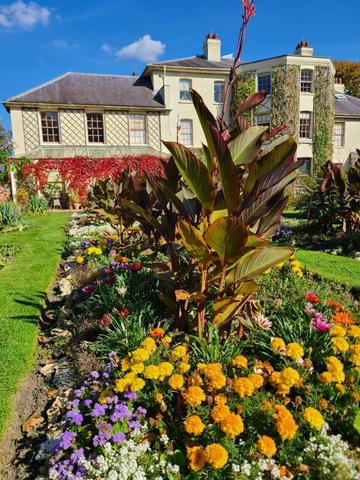
Figure 1: Down House and its gardens (photograph by Abbi Flint).
Whilst researching poems linked to Down House, I found a rich vein of poetry that explored Darwin’s work and life. These included occasional and informal poems in letters to Darwin from his friends and peers. For instance, the wonderful satirical poem ‘From the insects to our friend, Charles Darwin’, was sent to Darwin from his friend and neighbour, Ellen Frances Lubbock, following the publication of his volume on insectivorous plants in 1875. There are also, of course, many poems which relate to Darwin’s scientific ideas and expeditions which were outside the scope of my review. However, my interest was especially piqued by three recent volumes of poems which drew on archival material from his life as both inspiration and a source of text. These were Emily Ballou’s The Darwin Poems and Ruth Padel’s Darwin: A Life in Poems (both published in 2009), and, the central section of Clare Orchard’s (2016) Cold Water Cure.
Archival poetry
The use of archival material within poetry taps into a long tradition of working poetically with existing texts, often described under umbrella terms such as found poetry, poetic transcription, and documentary poetry: ‘poetry that (1) contains quotations from or reproductions of documents or statements not produced by the poet and (2) relates historical narratives, whether macro or micro, human or natural’ (Harrington 2011). The tools and techniques of poetry can ‘preserve the ambiguities and simultaneities of history’ (Kaufman 2021a) and provide a critical lens on the partialness of archives through, for instance, what the poet Carl Leggo calls poetry’s ‘fragmentariness’. Poetic approaches have been employed to develop innovative works which address archival silences, speak to difficult and marginalised histories, and bridge between historic texts and contemporary issues. For instance, Pepper Trail’s ecologically themed poem ‘There is grandeur in this view of life’, reworks extracts from Darwin’s The Origin of the Species using the removal of letters from words to evoke Anthropocene species loss.
Down House in archival poetry
The wealth of documents and textual material relating to Darwin’s life at Down House presents considerable opportunities for archival poetry. As Emily Ballou (2009, 193) noted, ‘if one were to use only the material that Charles Darwin himself recorded about his life, it would be possible to write a dozen collections of poems.’ The way that the poets worked with these archival texts varied, reflecting different dimensions of the relationships between the voices of poet and archive. Some poems, such as Clare Orchard’s ‘My Dearest Emma’ were constructed solely of lines ‘extracted, unaltered aside from line breaks and ordering, from Darwin’s letters to his wife Emma during the final illness of their daughter Annie’ (Orchard 2016, 9). Here, the poet’s role was as curator and arranger of extracts from the text to create a poetic form. Emily Ballou described a fluid process of being inspired by Darwin’s writing and using direct quotations within poems, with the way these were presented directed by her ‘own aesthetic and whim’ rather than consistently applied rules (Ballou 2009, 193). However, both Orchard and Ballou included notes within their collections which detailed the source material or archival inspiration for poems. Ruth Padel took a different approach; indicating words from other texts through quotation marks and detailing these sources through brief annotations or glosses at the side of the poem.
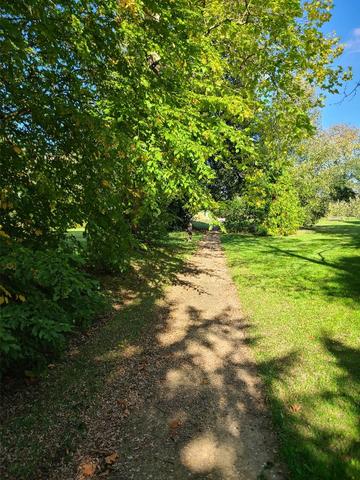
Figure 2: The 'sandwalk' at Down House, Darwin's 'thinking path' which featured in several poems (photograph by Abbi Flint).
Many of the rooms in the House appear in different poems, often as the setting for Darwin’s work and family life, including the kitchen, study, hallway and stairs, billiard room, drawing room, along with his thinking path – the ‘sandwalk’ – in the grounds (figure 2). Similarly, artefacts on display in the House appear in several poems. The ‘slide’ used by the family to descend the stairs is mentioned in Emily Ballou’s ‘After breakfast’, and ‘the screen/that hides his vomiting’ in Darwin’s study is mentioned in Ruth Padel’s ‘They give him a coat of fur’. It would be entirely possible to conduct a poetic tour of the House, to illustrate the family’s life there, or build extracts from poems into interpretation materials.
Many poems explore the overlapping nature of Darwin’s work and family life, and the meaning both brought to him. These poems encourage us to see beyond Darwin the scientist; bringing him to life as a father and husband, someone who had doubts and frailties as well as passion, curiosity and playfulness.
Poetry, with its imagined worlds, its variety of forms, its ability to jump time and perspective, and its use of metaphor, extended metaphor and simile, could perhaps examine the life and mind of this man without closing him in (Ballou 2010)
They also frame Down House as a loving, lively family home as well as a workplace, recognising the role Darwin’s family played in his scientific endeavours. For instance, poems within all three collections referred to Darwin encouraging his family to play instruments in experiments to explore whether earthworms responded to sound (Ruth Padel’s ‘Painting the bees, Emily Ballou’s ‘A family attempts to rouse the worms’, and Clare Orchard’s ‘Observations on their habits’). There are moving poems about the death of the Darwins’ daughter Annie, and the profound impact of this loss. The way the poems (such as Clare Orchard’s ‘Annie’s writing box’ and Ruth Padel’s ‘Submission to the will of Heaven’) evoke the love and grief associated with Annie’s illness and death bridge a very human connection across time.
Poetry, site and archive
These collections illustrate that conversations between poetry and heritage sites are not solely about the physical heritage of the site itself; archives linked with sites are also a crucial part of their heritage and how people experience them. Through incorporating words and phrases from the letters, diaries and writing of members of the Darwin family, the poets are creating space for their voices to be foregrounded – ‘intertwining historical voices with the voice of the poet’ (Kaufman 2021b, 27) – and bringing these into direct conversation with contemporary readers. Crafting poems with archival texts also enables a three-way dialogue between poet, site and archive, as Emily Ballou described in a 2009 interview with the Darwin Correspondence Project:
Going to Down House was wonderful. Seeing all the tools, the things that he collected, walking the sandwalk, and seeing the children's paintings on the back of manuscripts, holding his notebooks, there's a physicality that it brings […] So I suppose by being in those places and breathing the kind of air […] it's easier to transport myself back into that time and try to see what he might have felt, I suppose, not just thought.
As the three collections beautifully demonstrate, archival poems have the power to move us and connect us both intellectually and emotionally with the histories of Down House and the Darwin Family.
Further reading
Ballou, Emily (2009) The Darwin Poems. Crawley: University of Western Australia Press.
Ballou, Emily, (2010) “Darwin as Metaphor”, 19: Interdisciplinary Studies in the Long Nineteenth Century 11.
Harrington, Joseph (2011) ‘Docupoetry and archive desire’, Jacket2, 27 October 2011
Kaufman, Rachel (2021a) ‘Historical traces in archival poetry’, Journal of the History of Ideas Blog, 12 May 2021
Kaufman, Rachel (2021b) ‘Translating History’, Rethinking History, 25(1), 21-30.
Orchard, Clare (2016) Cold Water Cure. Wellington: Victoria University Press.
Padel, Ruth (2009) Darwin: A Life in Poems. London: Chatto & Windus.
Image credit: The 'sandwalk' at Down House, Darwin's 'thinking path' which featured in several poems (photograph by Abbi Flint).

