Part of the Series on Religious Traditions and Public Bioethics
19 November 2026, 5.30pm
Seminar Room 8, St Anne's College, Oxford
All welcome
Please note, due to fire safety regulations, seating is limited, and so it is advised to arrive early to ensure a seat.
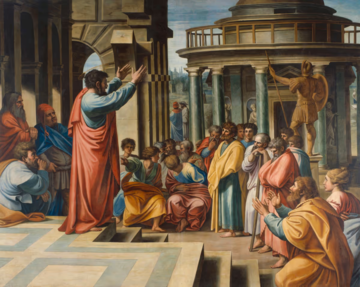
This panel discussion, the first in a larger series that will be looking at various religious and faith traditions, will examine how different streams of Christian thought in the past and present have conceived of the role(s) and relative authority of Christian beliefs within public bioethical debates.
Convenor: Andrew Moeller, Project Leaders, Biotechnology and the Humanities
Participants:
Jason Eberl, Director of the Albert Gnaegi Center for Bioethics, Saint Louis University.
Jason is the Hubert Mäder Chair in Bioethics and Professor of Philosophy, Professor of Health Care Ethics and Philosophy, and Director of the Albert Gnaegi Center for Bioethics, Saint Louis University. His research interests include the philosophy of human nature and its application to issues at the margins of life; ethical issues related to end-of-life care, biotechnology, and healthcare allocation; and the philosophical thought of Thomas Aquinas.
Michael Wee, Postdoctoral Researcher in Bioethics, Ethox Centre, Oxford
Michael is a Postdoctoral Researcher at the Ethox Centre. He is part of the ANTITHESES research platform investigating radical value disagreements in an age of polarisation and uncertainty. Part of his research explores the nature of disagreement and in particular how disagreement is shaped by divergent or overly narrow understandings of concepts like ‘reasoning’ and ‘argumentation’. This strand of research draws on a number of historical thinkers who have sought to expand our understanding of reasoning, such as: Pascal, Vico, Nietzsche, Wittgenstein. He is also interested in developing novel tools and methods for engaging constructively with radical disagreements, such as through uncovering hidden barriers in speech and promoting intellectual empathy and humility in debate.
Angeliki Kerasidou, Angeliki Kerasidou is a Professor of Bioethics at the Ethox Centre, Research Fellow at the Oxford Ethics and Humanities Centre, and Official Fellow of Reuben College. Angeliki studied theology and philosophy in Greece, Germany and the UK, and received her DPhil in 2009 from Oxford University. She is an expert in research ethics where she investigates the ethical implications of the introduction of new technologies in health research and practice. Her current research examines trust (relational, public, epistemic) and trust-related concepts (trustworthiness, reliance, expertise, validity) in three main areas: ethics of genomics, health data ethics, and ethics of AI.
Jess Wyatt, Doctoral Candidate in the Faculty of Theology and Religion, Oxford
Jess’ research explores the extent to which human embodiment can communicate something of what it means to be human and how we should act, and in particular how this might shape how we listen to and learn from those in the latter stages of dementia. Prior to her doctoral work Jess worked in refugee resettlement and completed degrees in theology, philosophy, and Christian ethics. Her research interests include the intersection of these disciplines: social and bioethics, theological anthropology, and the doctrine of creation. Jess is an ordained Anglican priest and so, alongside this research, works at a church in North Oxford.
The event will not be streamed online.
Medical Humanities Research Hub, TORCH Research Hubs