Dante in Oxford 2021
Primary Investigator
Gervase Rosser (St Catherine's College, History (History of Art))
Partner Organisations:
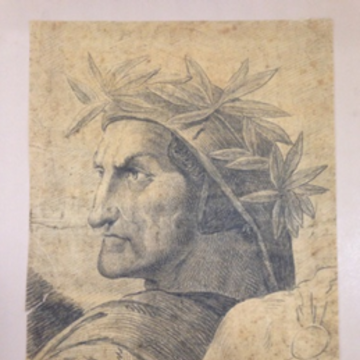
‘The most beautiful book in the literature of the world’ – this was Jorge Luis Borges’ description of the Divine Comedy. What has this extraordinary poem, a visionary account of the afterlife which reflects back at every point on the pains and hopes of life in the world, to say to audiences today? This TORCH-supported project takes up that question, in the 700th anniversary of Dante’s death in 1321. Focused on an exhibition at the Ashmolean Museum and Bodleian Library, it will expand into related events which will explore both the enduring creative potential of the poem and its capacity to generate debate across the humanities about the future of culture and knowledge.
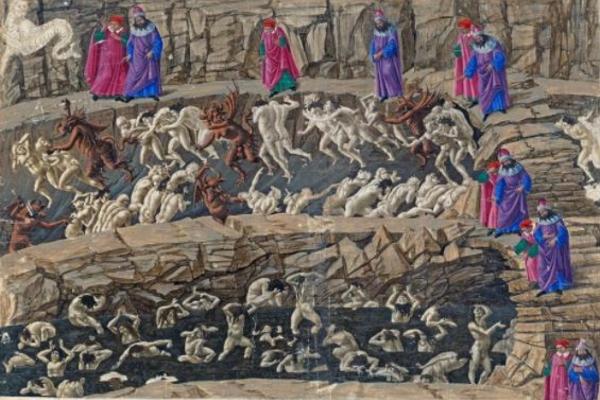
A display in the Bodleian’s Blackwell Hall (September – November) will show how readers’ engagement with the Divine Comedy has been shaped over centuries by the changing forms and illustrations of the book itself, ‘From Manuscript to Manga’. A companion exhibition at the Ashmolean (September – January) will highlight how Dante invented – and critiqued – the very idea of celebrity, which has become so prominent in our own culture.
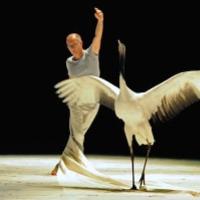
The visual and kinetic drama of the Comedy has inspired the French choreographer Luc Petton to create a version in dance, in which he collaborates with human dancers, birds and animals. Petton will present in Oxford a film recording of his Dante-inspired creation, Ainsi la Nuit. This event is scheduled for 4 November in the Bodleian auditorium.
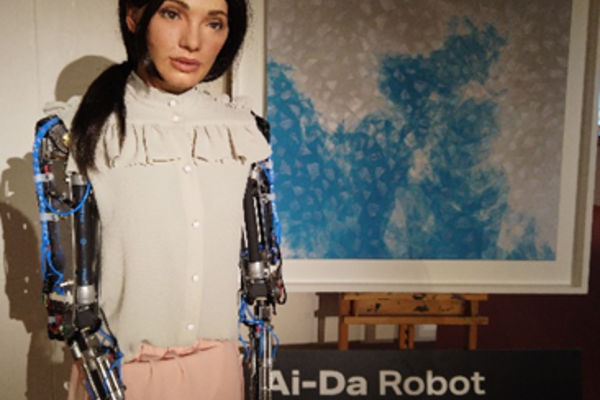
The exhibition at the Ashmolean will see an intervention by artificial intelligence, in the form of Ai-Da, ‘the world’s first humanoid artist-robot’. The display will include a work by Ai-Da produced in response to a passage in the Divine Comedy. In addition a performance is planned, and a symposium which will consider, in the light of this particular encounter with Dante, the changing role of artificial intelligence in the humanities.
For the full programme of events click here.
Find out more about the Oxford Dante Society and their events here.
Events:
Exhibition run: 8 September 2021 – 14 November 2021
Blackwell Hall, Weston Library
2021 was the year of Dante, the author of the Divine Comedy, who died 700 years earlier in 1321. The poem, which records his vision of Hell, Purgatory and Paradise, remained one of the peaks of world literature, and all cultures had recorded its influence. This exhibition, alongside one at the Ashmolean Museum, formed part of Oxford’s celebration of the man known universally as ‘the supreme poet’. Oxford had long been a particular home to the study of Dante, and the exhibitions brought unfamiliar treasures from University and College collections into public view.
The display at the Bodleian Library reflected the changing material form of the Comedy as a book. Readers’ experience had been profoundly affected by the changing format and illustrations of the text. This small exhibition opened with one of the finest early manuscripts of the poem, accompanied by illuminations of the story, and closed with cartoon and manga versions from modern times.
Dante 1481: the Commedia, illustrated by Botticelli
Tuesday 4 May 2021
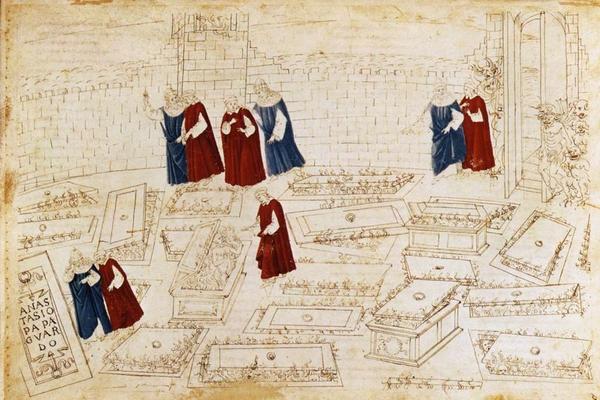
The 1481 edition of Dante's La Commedia contained engraved illustrations based on designs by Sandro Botticelli. No more than 19 illustrations were printed directly onto the page in any of the surviving copies, and in many of the 156 copies known to exist around the world, the number of illustrations was far lower, with some appearing misplaced or upside down or supplemented by later images. Each copy developed its own unique history and provenance as the books spread across Europe and beyond in the 540 years since they were first printed.
Programme
The event included short talks on Botticelli's illustrations (Professor Gervase Rosser, University of Oxford), on surviving copies (Professor Cristina Dondi, University of Oxford and Secretary of CERL), and on the context of the book's production (Dr Tabitha Tuckett, UCL).
Showing rare books online
2021 marked the 540th anniversary of the edition's publication and the 700th anniversary of Dante's death. To celebrate, copies from Italy, the USA and the UK were displayed, and their stories were shared by their current keepers. This online event gave audiences visual access to copies that could not otherwise have been brought together physically at one time.
Contact:
Gervase Rosser

Gervase Rosser
Project lead
St Catherine's College, Faculty of History (History of Art)
Gervase Rosser is Professor of the History of Art and curator of the joint exhibition about Dante which will open at the Ashmolean Museum (‘Dante and the Invention of Celebrity’) and Bodleian Libraries (‘Dante from Manuscript to Manga’) in September 2021. His work on early Italian painting has engaged with the relationship between ideas, texts and images in the art of Duccio, Giotto, and other contemporaries of Dante. He has contributed an essay on Dante and the visual arts to the Oxford Handbook of Dante, due to be published in this anniversary year.
Luc Petton
Founder of Le Guetteur
Luc Petton founded the dance company Le Guetteur in 1994. An avid ornithologist since childhood, he began to work with birds in various projects. In addition to his staged choreographies, he intervenes with his company in hospitals to work with disabled children and the elderly. Birds do not share the language barriers of human beings and consequently can help to establish new modes of communication. Ainsi la Nuit is a creation by Luc Petton launched in 2017 which responds to Dante’s Divine Comedy through the movements of dancers, owls, a vulture, a wolf, and a circus artist. At an event to be hosted at the Bodleian Library in November 2021, Luc Petton will introduce a screening of a film of this production. Luc Petton is an Officier of the French Ordre des Arts et des Lettres.

Ai-Da Robot
Artist
Ai-Da Robot is the world’s first ultra-realistic humanoid robot artist – named after Ada Lovelace, the pioneering female scientist and mathematician. Ai-Da was devised by Gallery Director Aidan Meller, with academic research by Researcher and Curator Lucy Seal. Constructed by Engineered Arts, and completed in 2019, Ai-Da is designed with the capability to create art and uses AI algorithms to produce work that holds a mirror up to society, and challenges the current and future uses of artificial intelligence. Since 2019, Ai-Da has featured in over 1,000 publications, and has travelled internationally for talks, fairs and exhibitions including the Barbican, Tate Modern, Abu Dhabi Art, TEDx, the UN and Ars Electronica. Ai-Da uses art historical perspectives to inform her work, with references from Dada, postmodernism, performance art, and medieval manuscripts. For ‘Dante and the Invention of Celebrity’ at the Ashmolean Museum, Ai-Da will use a variety of AI programmes, including her AI language model, to respond to Dante's Divine Comedy. Her art illustrates the timeless relevance of Dante's work, that still has the power to have an impact on us as we move into our rapidly morphing future.